
 Office in Freehold NJ |
Sometimes the most immediate benefit of bankruptcy is not eliminating a debt. It is stopping what is happening to you right now.
If you are thinking about bankruptcy, chances are the debt itself is only part of what is keeping you up at night. The phone keeps ringing. A creditor has sued you. Your paycheck is being garnished. You are afraid your car will be repossessed. Your bank account may be at risk. Or there may be a sheriff sale scheduled on your home.
One of the most powerful protections available in bankruptcy is called the automatic stay. In most cases, it takes effect when the bankruptcy petition is filed and stops many collection actions without waiting for a separate court order.
What Is the Automatic Stay?
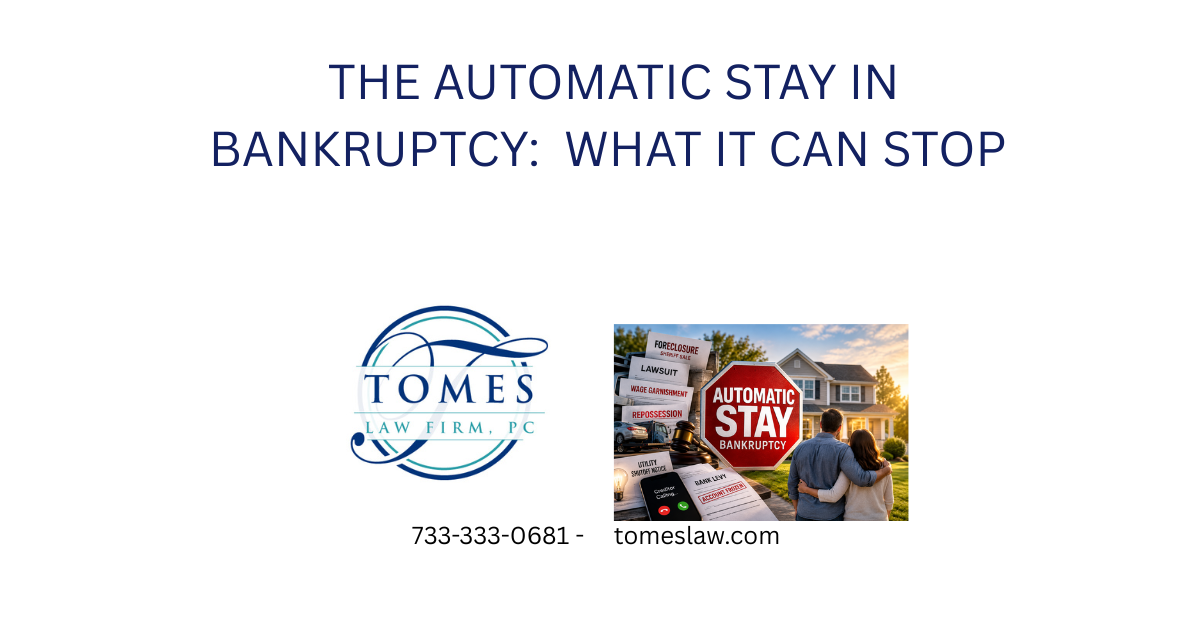
The automatic stay is a protection created by Section 362 of the Bankruptcy Code. Think of it as bankruptcy’s STOP sign to creditors.
It does not necessarily mean the debt disappears. It generally means creditors must stop many efforts to collect covered pre-bankruptcy debts while the stay is in effect. That breathing room can be enormously important when someone has spent months or years jumping from one financial emergency to another.
What Can the Automatic Stay Stop?
Collection Calls and Letters
Creditors generally cannot continue demanding payment on debts covered by the stay. For someone who has started dreading every telephone call and every trip to the mailbox, that alone can provide immediate relief.
Debt Collection Lawsuits
The stay generally stops the start or continuation of lawsuits seeking to collect debts that arose before bankruptcy.
Wage Garnishments
A bankruptcy filing can generally stop further wage garnishment for debts covered by the stay. When part of every paycheck is already disappearing before it reaches your bank account, stopping the garnishment can provide immediate breathing room.
Bank Levies and Account Collection
The stay can stop many further attempts to seize or collect money from a bank account. But timing matters. Filing bankruptcy does not necessarily mean that money already taken before the filing will automatically be returned. If a levy or frozen account is involved, have the specific facts reviewed immediately.
Repossession
The stay can stop many efforts to repossess a vehicle after the bankruptcy is filed. But waiting until after the vehicle has already been taken can make the situation much more complicated. If you are behind and repossession is a real possibility, speak with a bankruptcy attorney before the tow truck arrives.
Foreclosure: The Day-Before-the-Sheriff-Sale Call
We regularly meet New Jersey homeowners who come to us the day before a scheduled sheriff sale. They are terrified that they are about to lose their home and often believe they have run out of options.
In the right circumstances, filing a Chapter 13 bankruptcy before the foreclosure sale can stop the sale through the automatic stay. The homeowner may then be able to use a Chapter 13 repayment plan to cure the past-due mortgage payments over time – potentially over a plan lasting up to 60 months – while continuing to make the regular mortgage payments that come due after filing.
For example, someone who is $30,000 behind on a mortgage may not have $30,000 available to stop a foreclosure. A Chapter 13 plan may provide a structured way to address those arrears over time rather than requiring the homeowner to come up with the entire amount immediately.
That can be the difference between losing a home and having a structured opportunity to save it.
But there is an important warning: do not intentionally wait until the day before the sheriff sale to call a bankruptcy attorney.
Yes, we have had clients come to us at the last minute and successfully stop a sheriff sale. But waiting until the last minute generally costs more money and creates far more stress.
A bankruptcy petition cannot simply be thrown together without information. We need financial information and documents to properly prepare and file the case. When a sheriff sale is hours away, that can mean suddenly scrambling for tax returns, paystubs, bank statements, mortgage information and other documents while worrying about whether your home will be sold.
That is stress you do not need.
It also takes additional attorney and staff time to turn what could have been an orderly bankruptcy filing into an emergency filing against a rapidly approaching deadline. Emergency work costs more.
If you already know you are behind on your mortgage and foreclosure is moving forward, give yourself – and your attorney – time to develop a plan. Bankruptcy can be an extraordinarily powerful tool for stopping foreclosure, but it works much better when there is time to use it strategically rather than racing against the clock.
Can Bankruptcy Stop a Utility Shutoff?
Bankruptcy law also provides protection involving utility service. A utility generally cannot discontinue service solely because you filed bankruptcy or because you owe a pre-bankruptcy utility bill. However, the utility can require adequate assurance of payment for service after the bankruptcy, and there are deadlines associated with that protection. Bankruptcy is not permission to stop paying new utility bills.
What About an Eviction?
Do not assume bankruptcy will stop an eviction.
The rules are more complicated, particularly when a landlord already obtained a judgment for possession before the bankruptcy filing or when certain other statutory exceptions apply. If you are facing eviction, tell your bankruptcy attorney exactly what has already happened in the landlord-tenant case and provide the court papers.
What About IRS or New Jersey Tax Collection?
The automatic stay can stop many tax collection actions, but it does not stop everything the IRS or New Jersey Division of Taxation may do. For example, the Bankruptcy Code contains exceptions for certain tax proceedings and notices. And stopping collection does not mean the underlying tax debt has been discharged.
Tax debt in bankruptcy requires a separate analysis. Some income tax debts may be dischargeable when specific requirements are satisfied; other taxes may survive bankruptcy. If tax debt is part of the problem, the bankruptcy and tax strategy should be considered together.
Does the Automatic Stay Mean I Can Keep My House or Car?
Not necessarily. The automatic stay can stop or delay a creditor from taking action, but it does not automatically eliminate the creditor’s rights.
If you want to keep a financed car, the secured debt still has to be addressed. If you use Chapter 13 to save a home, you generally must continue making the regular mortgage payments that come due after filing while complying with the Chapter 13 plan. The stay creates breathing room. What you do with that breathing room is part of the bankruptcy strategy.
The Automatic Stay Is Not a Free Pass
Filing bankruptcy does not mean you can stop paying every bill. Depending on your case, you may need to make post-filing mortgage or vehicle payments, make Chapter 13 trustee payments, provide documents, attend required proceedings and comply with other bankruptcy obligations.
The goal is not simply to stop creditors for a few weeks. The goal is to use the protection of bankruptcy to build a workable path forward.
Can a Creditor Ask the Court to Lift the Stay?
Yes. A creditor can ask the Bankruptcy Court for permission to continue an action that would otherwise be prohibited. This is commonly called a motion for relief from the automatic stay. Secured creditors may seek relief in circumstances involving their collateral, which is another reason a bankruptcy filing should be part of a plan rather than simply an emergency filing with no strategy for what comes next.
Does the Automatic Stay Stop Everything?
No. Bankruptcy law contains important exceptions. Certain criminal proceedings, family-law matters, tax-related actions and other proceedings may continue. The exact answer depends on what the creditor or other party is trying to do and what has already happened before the bankruptcy was filed.
What If I Filed Bankruptcy Before?
Prior bankruptcy cases can change the automatic stay rules. If a bankruptcy case was pending and dismissed during the previous year, the stay in a new case may terminate after 30 days unless the court extends it. When there have been multiple prior cases, the rules can be even more restrictive and court action may be needed to impose a stay.
Tell your bankruptcy attorney about every prior bankruptcy immediately. Do not assume a new filing will automatically provide the same protection as a first case.
What Happens After We File?
You generally do not need to personally call every creditor and argue with them. Bankruptcy notices are sent to creditors. When something urgent is pending, however – such as a sheriff sale, garnishment or repossession – your attorney may take additional steps to make sure the appropriate parties know about the filing promptly.
If a creditor contacts you after the bankruptcy is filed, keep the letter, email, voicemail or screenshot. Write down who contacted you, when and what was said, and send the information to your bankruptcy attorney rather than getting into an argument with the creditor.
What If a Creditor Ignores the Automatic Stay?
Creditors with notice of the bankruptcy generally cannot simply ignore the automatic stay. Federal law provides remedies for certain willful violations of the stay, including actual damages, costs and attorneys’ fees, and in appropriate circumstances punitive damages.
That is why documentation matters. Save everything and tell your attorney.
Do Not Wait Until the Last Possible Minute
People often struggle for months because they do not want to file bankruptcy. They borrow from one account to pay another. They use one credit card to make the minimum payment on another. They drain savings. Sometimes they take money from retirement accounts. They stop opening the mail.
Then something turns a difficult financial situation into an emergency: a lawsuit, garnishment, repossession, bank levy or sheriff sale.
Bankruptcy may be able to stop certain collection actions, but when you file can matter just as much as whether you file. The better time to speak with a bankruptcy attorney is before the emergency becomes irreversible.
The Automatic Stay Is a Pause. The Goal Is a Plan.
At Tomes Law Firm, we do not look at bankruptcy as simply filing paperwork to make creditors stop calling. We look at what happens next.
- Can you afford your home?
- Should you keep your car?
- What debts can bankruptcy eliminate?
- Are there debts bankruptcy will not eliminate?
- Would Chapter 7 or Chapter 13 better address your situation?
- What does your financial life look like after the bankruptcy is over?
The automatic stay can provide the breathing room. The bankruptcy plan should help you use that breathing room to move forward.
If you are facing collection calls, a lawsuit, wage garnishment, bank levy, repossession, foreclosure or sheriff sale in New Jersey, you do not have to wait until the situation becomes an emergency to find out what your options are. Contact Tomes Law Firm at 732-333-0681 or visit us online at tomeslaw.com