
 Office in Freehold NJ |
by Frances A. Tomes, Esq. Tax and Litigation Attorney
Owing the IRS can feel overwhelming, but many taxpayers have more options than they realize. At Tomes Law Firm, we help individuals and business owners throughout New Jersey address tax debt using a team approach that draws on experience in tax, financial analysis, and litigation strategy. The information below is intended to help you better understand your situation, the steps you should take, and the resolution options that may be available.
What Should You Do If You Owe the IRS and Cannot Pay?
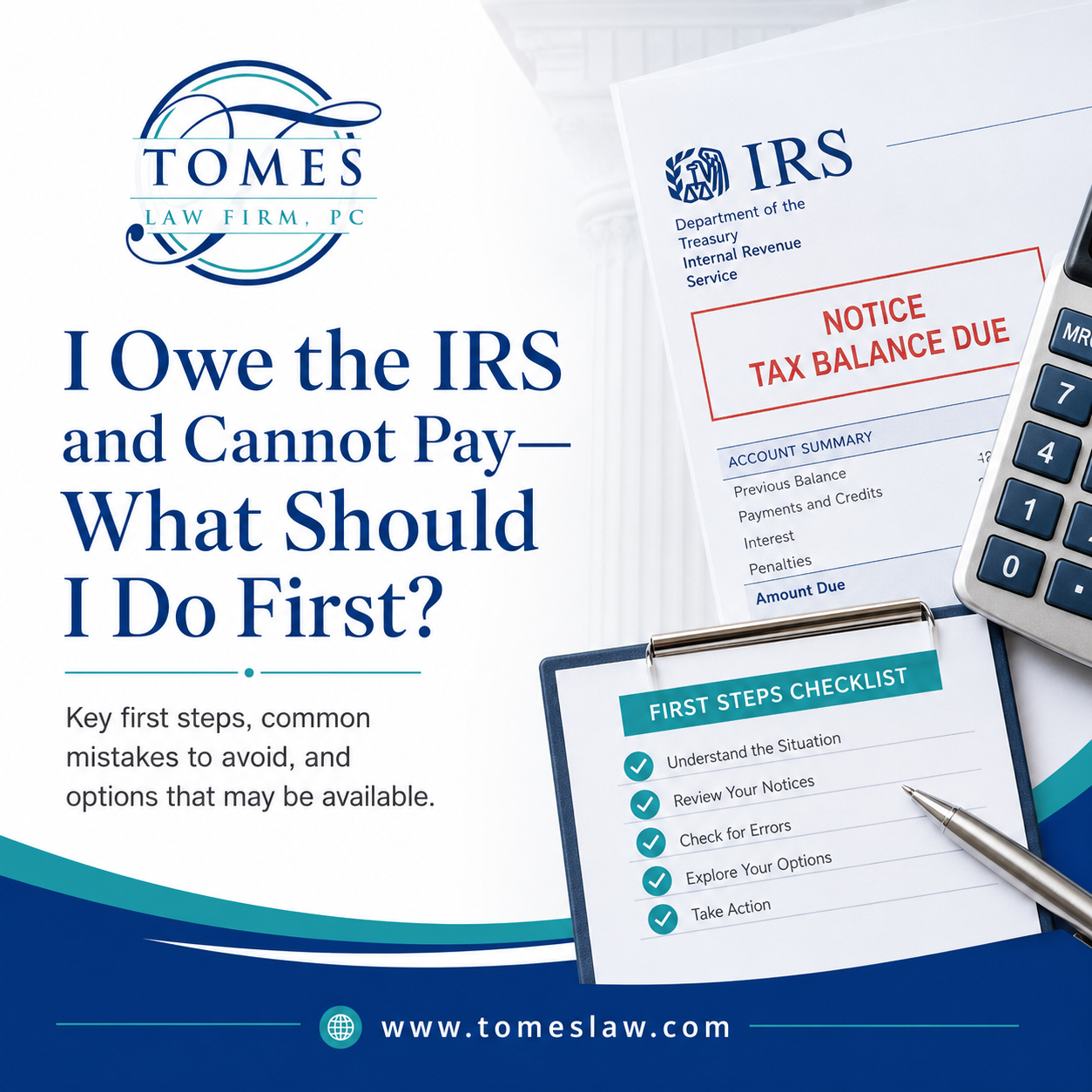
If you owe the IRS and cannot afford to pay the balance in full, do not ignore the notices or agree to a payment you cannot maintain. The first steps are to confirm that the amount is correct, file any missing tax returns, determine where your account stands in the IRS collection process, and review your complete financial situation before choosing a resolution.
Depending on your circumstances, you may qualify for an installment agreement, temporary hardship status, penalty relief, an Offer in Compromise, or another collection alternative.
Do Not Ignore the IRS Problem
When you cannot afford to pay the IRS, it may be tempting to avoid opening notices or responding to letters. Unfortunately, the problem generally does not go away on its own.
The IRS may continue adding penalties and interest. If the balance remains unresolved, the IRS may eventually take collection action, including:
- Filing a federal tax lien
- Levying a bank account
- Garnishing wages
- Seizing certain property
- Taking collection action against a business
You may not need to pay the entire balance immediately, but you do need to understand what the IRS is requesting and whether a response deadline is approaching.
Review Every IRS Notice Carefully
IRS notices often contain important deadlines and information about the collection process.
When you receive an IRS notice, identify:
- The tax years involved
- The amount the IRS says you owe
- The reason for the balance
- The deadline to respond
- Whether collection action is being threatened
- Whether you have appeal or hearing rights
Some notices give taxpayers only a limited amount of time to request a Collection Due Process hearing or challenge a proposed levy. Missing the deadline may reduce the protections and options available so it important to not miss a deadline.
Confirm That the IRS Balance Is Correct
Before agreeing to a payment plan, determine whether the balance is accurate. The amount shown may include:
- Unpaid income or business taxes
- Failure-to-file penalties
- Failure-to-pay penalties
- Estimated tax penalties
- Payroll tax penalties
- Interest
- Additional tax assessments
There may also be missing payments, incorrectly prepared returns, unfiled returns, or returns prepared by the IRS without all of the deductions and credits you may have been entitled to claim. Just because the IRS says you owe does no mean it is correct. We have found numerous IRS notices that were wrong.
File Any Missing Tax Returns
The IRS generally requires taxpayers to become current with their filing obligations before approving most tax resolution options. Depending on the situation, this may include filing missing:
- Individual income tax returns
- Business income tax returns
- Payroll tax returns
- Employment tax returns
Filing missing returns does not mean that you must immediately pay the entire balance. It allows you to determine the correct tax liability and begin evaluating the available resolution options.
Leaving returns unfiled can make the problem more serious. The IRS may prepare a Substitute for Return using income information reported by third parties, without including all of the deductions, expenses, exemptions, or credits that may have reduced the tax.
Review Your Complete Financial Situation
The best resolution option depends on much more than the total amount you owe. Many IRS programs are only available if you are not financially able to pay the taxes.
A complete financial analysis may include:
- Household income
- Necessary monthly living expenses
- Bank accounts
- Home equity
- Vehicles
- Retirement accounts
- Business assets
- Other debts
- Future earning ability
- The remaining IRS collection period
The IRS may request a detailed collection financial statement before approving certain resolutions.
It is important to understand how the IRS will evaluate your income, expenses, and assets before providing that information. Incomplete or poorly presented financial information may lead to a higher payment or an arrangement that you cannot realistically maintain. If you claim an expense that the IRS does not allow, the IRS will demand you use that payment towards paying your back taxes. This is where many taxpayers end up with a payment plan higher than they can afford and higher than the IRS will legally accept.
Understand Your IRS Tax Resolution Options
The right tax resolution option will depend on your income, necessary expenses, assets, tax compliance, and ability to pay.
IRS Installment Agreement
An installment agreement allows you to pay your IRS tax debt over time. The monthly payment may depend on:
- The amount owed
- Your financial condition
- The type of tax involved
- The time remaining for the IRS to collect
- Whether the agreement requires full payment
A payment plan should be based on an amount you can realistically maintain while continuing to meet your current tax obligations. An Installment Agreement does not necessary mean you will full pay the tax. But it does require a detailed analysis of your expenses and the allowable expenses under the IRS regulations. .
Currently Not Collectible Status
If paying the IRS would prevent you from covering necessary living expenses, the IRS may temporarily place your account in Currently Not Collectible status.
This may stop most active collection efforts for a period of time. However, the tax debt is not erased, and penalties and interest may continue to accrue. The IRS may periodically review your financial condition to determine whether your ability to pay has improved
Offer in Compromise
An Offer in Compromise may allow a qualifying taxpayer to settle an IRS tax debt for less than the full amount owed.
However, not everyone qualifies.
The IRS generally considers:
- Income
- Allowable living expenses
- Bank balances
- Asset equity
- Retirement funds
- Future ability to pay
An Offer in Compromise should be considered only after a careful analysis. Filing an offer that has little chance of acceptance may cost time and money while penalties and interest continue to grow and does NOT stop the time period for the IRS to collect. An Offer in Compromise takes many months to resolve because the IRS does their due diligence. The IRS is not in the business of simply forgiving tax debt if there is an ability to pay. That year that your Offer in Compromise is pending can cause substantial interest that will have to be paid if the Offer is not accepted.
Penalty Abatement
Some taxpayers may qualify to have certain penalties reduced or removed.
Penalty relief may be available based on:
- Prior filing and payment compliance
- Serious illness
- Death in the family
- Natural disaster
- Unavoidable absence
- Reliance on a tax professional
- Other reasonable circumstances
Penalty abatement generally does not eliminate the underlying tax, but it may reduce the total amount owed.
IRS Collection Appeal
If the IRS is threatening a levy or has already taken collection action, you may have the right to request a hearing or appeal. Prompt review is especially important when you receive:
- A Final Notice of Intent to Levy
- IRS Letter 1058
- Notice LT11
- A notice of a federal tax lien
- A notice explaining Collection Due Process rights
Appeal deadlines can be short and should not be ignored. They are not extendable and you will lose your rights if you wait.
Do Not Agree to a Payment You Cannot Afford
Many taxpayers call the IRS and agree to the first payment amount suggested because they are afraid of immediate collection action. That may temporarily reduce the pressure, but it can create another problem if the payment prevents you from covering necessary expenses such as:
- Rent or mortgage payments
- Food
- Utilities
- Transportation
- Medical expenses
- Insurance
- Business operating costs
Before agreeing to a payment, determine whether:
- The proposed amount is affordable
- A lower payment may be available
- Hardship status is more appropriate
- Penalties may be reduced
- The collection statute affects the strategy
- Another resolution would provide a better result
The goal is not simply to stop IRS notices or collection. The goal is to create a resolution that you can successfully maintain.
Should You Call the IRS Yourself?
You have the right to contact the IRS yourself, but you should be cautious about providing financial information or accepting an agreement before you understand the consequences.
An IRS representative’s job is to collect the tax according to IRS procedures. The representative does not act as your attorney, financial adviser, or advocate. They are not required to give you the best resolution available. In fact their job it to get as much of the tax money you owe as quick as possible.
Before calling the IRS, you should understand:
- Whether the balance is correct
- Whether you are entitled to appeal
- Which resolution options may be available
- How your assets will be evaluated
- What monthly payment you can realistically afford
- Whether the IRS collection deadline affects the case
Why a Team Approach Matters
Tax resolution can involve much more than completing a form or requesting a payment plan.
A case may require:
- Tax law analysis
- Detailed financial review
- IRS collection procedure
- Negotiation
- Appeals
- Litigation strategy
- Protection against enforced collection
At Tomes Law Firm, clients benefit from a team experienced in both tax and litigation matters. Depending on the needs of the case, the team may include an attorney, a CPA, and an Enrolled Agent with prior IRS experience.
This team approach allows us to evaluate the legal, financial, tax, and collection issues affecting the case rather than viewing the problem from only one perspective.
Our team can help you:
- Review IRS notices and account records
- Confirm whether the tax balance is accurate
- Identify missing returns or compliance issues
- Request a temporary collection hold when appropriate
- Analyze income, expenses, and assets
- Compare available tax resolution options
- Communicate and negotiate with the IRS
- Respond to threatened collection action
- Develop a strategy based on your individual circumstances
Frequently Asked Questions
Can I get an IRS payment plan if I cannot pay in full?
Possibly. The IRS offers several types of installment agreements. The amount of the payment and the financial information required will depend on the amount owed and your ability to pay.
Can the IRS take money from my bank account?
The IRS may levy a bank account after following required notice procedures. If you receive a Final Notice of Intent to Levy, it is important to review the notice immediately because you may have limited time to request a hearing.
Can I resolve my tax debt if I have unfiled returns?
The IRS generally requires missing returns to be filed before approving most collection alternatives. Filing the returns is often one of the first steps in the resolution process.
Can I settle my IRS debt for less than I owe?
Some taxpayers qualify for an Offer in Compromise, but eligibility depends on income, expenses, assets, and future ability to pay. Simply being unable to pay the full balance immediately does not guarantee that the IRS will accept a reduced settlement.
Will the IRS stop collection activity while my case is being reviewed?
In some circumstances, a representative may be able to request a temporary collection hold while records are obtained and the appropriate resolution is evaluated. A hold is temporary and does not resolve the underlying debt.
The First Step Is Understanding Your Options
You do not need to solve the entire problem before asking for help.
The first step is determining what you owe, where your case stands in the IRS collection process, and which resolution options may realistically be available.
The sooner the matter is reviewed, the more time there may be to protect your income, assets, and business while developing a workable plan. If you owe the IRS and cannot afford to pay the balance in full, contact Tomes Law Firm to schedule a consultation. Our New Jersey tax resolution team can review your situation, explain the available options, and help you take the next step toward resolving the problem Call us today at 833-4-IRSTAX or 732-333-0681 or schedule through our website at tomeslaw.com