
 Office in Freehold NJ |
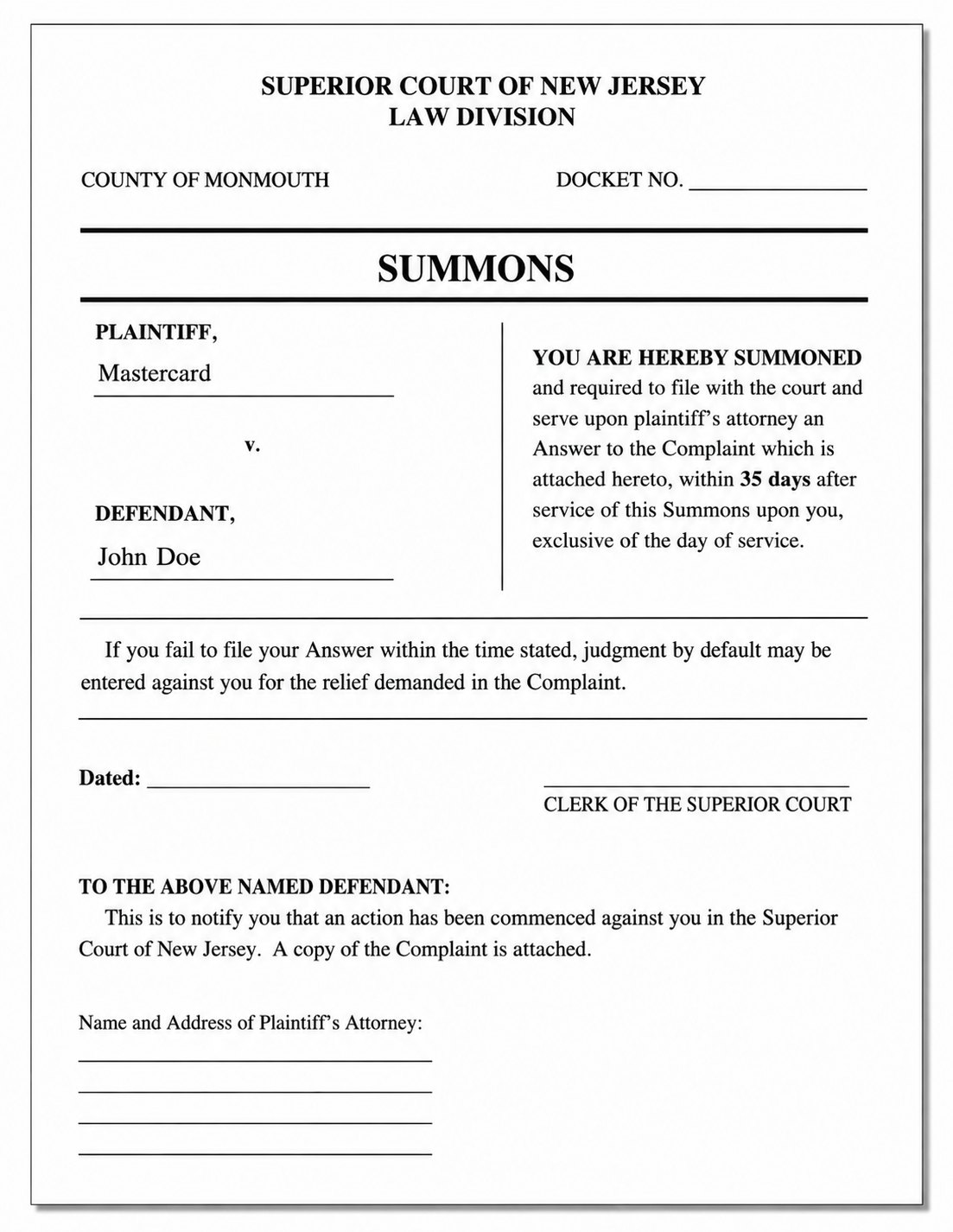
| Quick Answer: If you are served with a debt lawsuit in New Jersey, you generally have 35 days to file your Answer. Check the date and instructions on the Summons immediately. Do not ignore the lawsuit or rely on settlement talks to protect your deadline. Acting before a judgment is entered may give you more options to defend the case, negotiate a settlement, or arrange payments. |
Being served with a debt lawsuit can be scary. You may not know whether the debt is correct, whether you can afford to pay it, or what will happen if you do nothing.
The most important thing to know is this: do not ignore the lawsuit.
At Tomes Law Firm, we regularly help people who have been sued over credit cards, personal loans, medical bills, and other consumer debts. Sometimes there are defenses to the lawsuit. Sometimes the best solution is a negotiated settlement or payment arrangement. But the earlier we become involved, the more options we may have.
What Does It Mean When I Am “Served” With a Debt Lawsuit?
Being served means you have received legal papers telling you that someone has filed a lawsuit against you. Usually, the papers include a Summons and Complaint. The Complaint should tell you who is suing you, how much they claim you owe, and the basis for the lawsuit.
Do not assume that everything in the Complaint is automatically correct.
The company suing you may be the original creditor. It may also be a debt buyer that purchased the account from someone else. Either way, a lawsuit is not the same thing as a judgment. The creditor still has to obtain a judgment before it can use judgment collection remedies against you.
How Long Do I Have to Respond to a Debt Lawsuit in New Jersey?
In New Jersey, you generally have 35 days to file an Answer. If you case is in the Special Civil Part, check the date and instructions on the Summons immediately so you do not miscalculate the deadline. In the Special Civil Part, default judgments are automatically entered by the court if you do not answer on time.
An Answer is your formal response to the lawsuit. Calling the creditor does not take the place of filing an Answer. Calling the collection attorney does not take the place of filing an Answer. Trying to work out a payment plan does not necessarily stop the lawsuit or extend your deadline.
If more than one person is named as a defendant, each person should make sure that they properly respond to the lawsuit.
What Happens If I File an Answer?
Filing an Answer prevents the creditor from simply moving forward based on your failure to respond. The case can then proceed through the court process.
- exchanging information and documents
- reviewing the creditor’s proof
- raising available defenses
- settlement discussions
- court mediation
- motions
- a trial if the case cannot be resolved
This period can also give your attorney an opportunity to determine whether the creditor can actually prove its case and whether a practical settlement makes sense.
Do Not Assume You Have No Defense Just Because You Recognize the Debt
A lot of people see the name of a credit card company or recognize an old account and think there is no reason to respond. That can be a mistake.
Recognizing an account does not automatically prove that the plaintiff can establish the amount claimed, its ownership of the account, or every other element required to obtain judgment.
Does a Debt Collector Have to Prove That I Owe the Money?
Yes. Filing a lawsuit does not automatically prove that the amount claimed is correct. The facts of each case are different, but questions may include:
- Is this actually your account?
- Is the amount being claimed correct?
- Has the creditor properly documented the balance?
- If a debt buyer is suing, can it establish its right to collect the account?
- Are payments or credits missing?
- Are there other legal defenses?
Keep your statements, receipts, payment records, letters, settlement communications, and other documents relating to the account. Those records may become important later.
What Should I Not Do After I Am Served?
- Do not throw the court papers away.
- Do not miss the 35-day deadline while trying to negotiate.
- Do not agree that the amount is correct before reviewing the records.
- Do not sign a settlement or consent judgment you do not understand.
- Do not assume that making a payment automatically stops the lawsuit.
Can I Settle a Debt Lawsuit After I Have Been Sued?
Often, yes. A lawsuit does not necessarily mean the case has to go to trial. Settlement discussions can take place while the lawsuit is pending, and some cases may also involve court mediation.
Depending on the circumstances, an attorney may be able to negotiate a reduced lump-sum settlement or a payment arrangement. But your negotiating position can change dramatically once the creditor has a judgment.
Naomi Called Us Before Judgment — And She Still Had Options
One client, we will call her Naomi, contacted us while the lawsuit was still pending and before a default judgment was entered. There was still time to act.
We were able to become involved while the creditor still had to deal with the lawsuit and before it had the collection powers that come with a judgment. Ultimately, we were able to settle Naomi’s debt for approximately 75% of the amount claimed.
Naomi called while we could still do something.
Cindy Called Us After Judgment and Wage Garnishment
Another client , we’ll call her Cindy, came to us much later. By the time Cindy contacted us, the creditor already had a judgment and had begun garnishing her wages.
That put her in a very different position. The creditor was already receiving money through the wage garnishment, so there was little reason for the creditor to agree to take substantially less.
We reviewed the situation, but there was very little we could do to improve the result. The leverage that might have existed before judgment was gone.
Cindy called after the creditor already had the power to take money from her paycheck.
What Happens If I Ignore the Lawsuit?
If you do not respond, the court can enter a default. The creditor may then take additional steps to obtain a default judgment. Once a valid judgment is in place, New Jersey law gives a judgment creditor tools to try to collect.
- levy or freeze money in a bank account
- garnish a portion of wages
- place a lien against real estate
- use other lawful judgment collection procedures
There may be circumstances where a default or default judgment can be challenged or vacated. Whether that is possible depends on the facts, including how quickly you act and whether you have a valid defense. But it is usually much better to address the lawsuit before judgment than to try to undo the damage afterward.
What If I Cannot Afford to Pay the Debt?
Not being able to pay the full balance does not mean you should ignore the lawsuit. An attorney can review possible defenses, discuss settlement, negotiate a payment arrangement, and represent you in mediation.
If the lawsuit is only one part of a larger debt problem, it may also make sense to look at the bigger financial picture and determine whether another debt-relief option should be considered.
Can an Attorney Help Me With a Payment Plan?
Yes. Not every debt lawsuit has to be fought through trial. Sometimes the client owes the debt but simply cannot pay the entire balance at once. An attorney can evaluate the case, determine whether defenses exist, and discuss possible settlement options, including a lump-sum settlement or payment plan.
Our goal is not to fight a case just for the sake of fighting it. Our goal is to figure out the best financial and legal result for you while you still have options.
What Should I Do If I Was Just Served?
Start by finding the date you were served and checking the deadline on the Summons. Then gather:
- the Summons and Complaint
- letters from the creditor or debt collector
- old account statements
- proof of payments you made
- settlement offers
- emails or other communications about the debt
- any other documents relating to the account
Most importantly, do not put the papers aside and wait. The response period continues to run.
Frequently Asked Questions
How long do I have to answer a debt lawsuit in New Jersey?
You generally have 35 days to file your Answer. Check the date and instructions on the Summons immediately.
Should I call the debt collector instead of filing an Answer?
No. Speaking with the creditor or its attorney does not replace your obligation to respond properly to the lawsuit.
Can I settle after I have been sued?
Yes. Many debt lawsuits are resolved through settlement or payment arrangements before trial.
Can the creditor garnish my wages as soon as it sues me?
A lawsuit alone is not the same as a judgment. The creditor generally needs a judgment before using post-judgment collection remedies such as a wage execution.
What if I really owe the money?
You may still have options. The amount should be reviewed, and settlement or payment arrangements may be possible. Owing money does not mean you should ignore the lawsuit.
What if there is already a judgment against me?
An attorney can determine whether there may be grounds to challenge a default judgment and what other options remain. Waiting until after judgment can significantly reduce your negotiating leverage.
The Earlier You Deal With the Lawsuit, the More Options You May Have
Naomi and Cindy came to us with similar problems at very different stages. Naomi contacted us before judgment. We still had room to negotiate and ultimately resolved the debt for approximately 75% of the amount claimed. Cindy contacted us after judgment and after her wages were already being garnished. By then, the creditor had much less reason to negotiate.
That is why we tell people who receive debt lawsuit papers in New Jersey: do not wait until the creditor has a judgment to find out what your options are.
| If you have been served with a debt lawsuit in New Jersey, do not wait until there is a judgment to find out whether we can help. Call Tomes Law Firm at 732-333-0681. We can review the lawsuit, explain your options, and help you decide what to do before your deadline passes. |